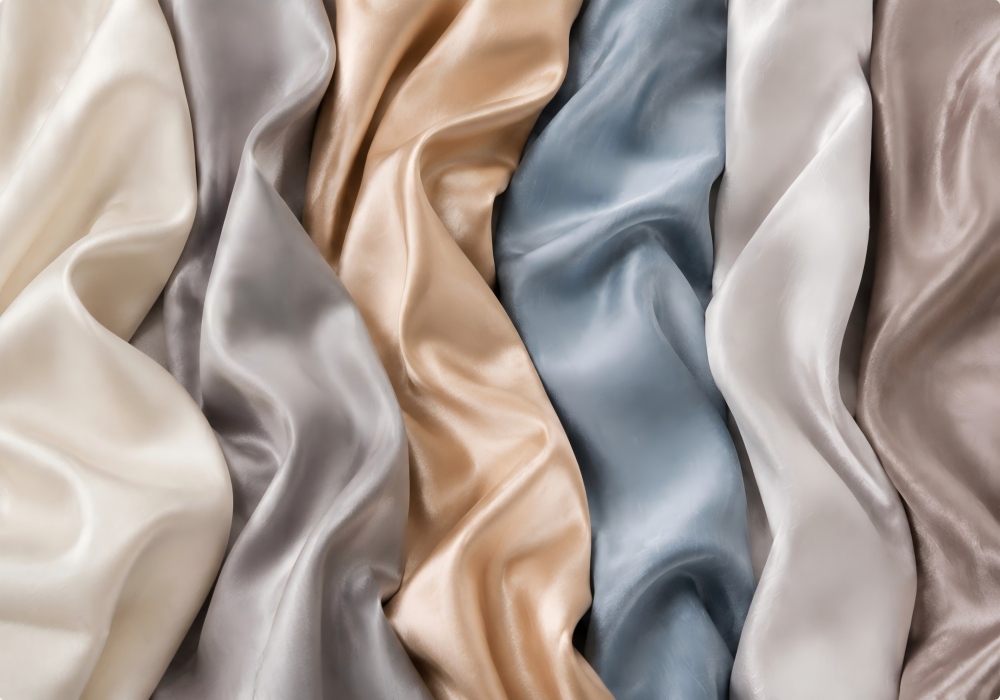

Custom-Dyed Organza and How to Keep Color and Hand Consistent in Bulk
A pale champagne organza can look almost neutral as a single layer over ivory lining and noticeably warmer where it gathers into several layers. For a custom-dyed order, the approval sample needs to answer two questions. Does the fabric match the color target under agreed conditions? Does it give the right color and hand when assembled as part of the garment?
Develop the color on the intended fabric
Give the mill a physical color reference and the exact fabric quality. A lab dip is a small dyed sample used to develop and assess a shade before bulk production. Request it on the intended substrate, with the production yarn and weave. If the lab dip goes through a different finishing process from the bulk fabric, ask for a larger finished sample before approving the final hand and appearance.
The dye route depends on the fibers present. Disperse dyes are commonly used for polyester, acid dyes for nylon and reactive dyes for cellulosic fibers such as lyocell. In a blend, confirm how the mill will color each component and whether the result should look uniform or show a deliberate two-tone effect. DyStar’s dye ranges for polyester, polyamide and cellulosic fibers
Approve the shade under repeatable conditions
Agree on the light sources, backing, layer count and fabric orientation for visual comparison. Use the same setup for the reference and the lab dip. Check under a daylight simulator and under a second light relevant to the garment’s use, such as the retail lighting specified by the brand. Two samples that match under one source can differ under another. This is known as metamerism. AATCC EP9 visual assessment procedure · X-Rite guidance on evaluating color under different light sources
When a buyer and mill exchange instrument readings, agree on sample preparation as well. Backing can affect readings on sheer fabric because light passes through the sample. The lab may fold the cloth to achieve sufficient opacity or use a defined backing under an agreed procedure. Keep a separate visual check for the garment as it will be worn, using the intended lining and the actual number of layers. Datacolor’s textile sample measurement guidance
Carry the approval through to bulk
Approve a sample after the planned production finish and keep a dated swatch with its article number, color code and finish reference. Include a note describing the approved hand, such as the softness of an overlay or the spring needed in a gathered trim. Check the first finished bulk sample against that reference for shade, luster, transparency and hand before releasing the lot for cutting.
For orders spanning multiple dye lots, ask for lot identification on the rolls and compare bulk cuttings side by side. Where the mill supplies a shade band, use its swatches to review the range across rolls or lots. If there is visible variation within the approved range, plan cutting so adjacent garment panels come from the same shade group where practical. Agree on colorfastness requirements separately according to the end use. For example, a dark overlay against a pale lining may warrant a rubbing fastness test. ISO 105-X12 colorfastness to rubbing
For a reorder, send the approved finished swatch and its reference details. The mill can then compare the new lot against the color and hand you approved for the original garment.
On this page
Evaluate an organza swatch
Compare opacity, hand and drape before selecting your fabric.