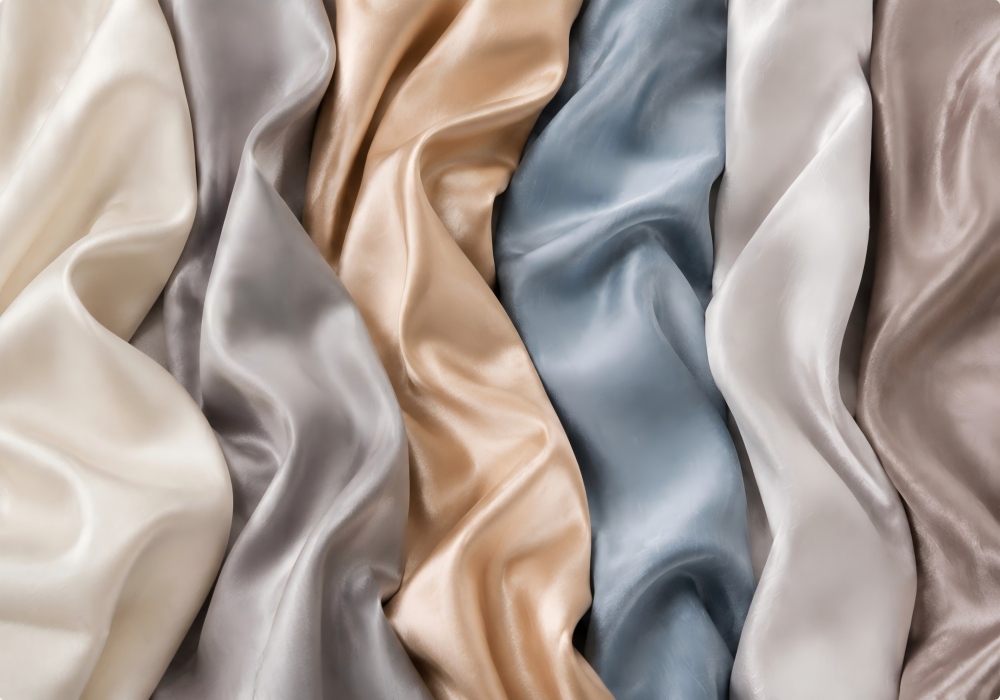

Why Some Organza Fabrics Hold Their Shape and Others Fall Softly
Pin two organza samples into the same sleeve shape and one may stand clear of the arm while the other settles into the gathers. The difference can show up even when both fabrics have a similar weight. What matters is how readily the finished cloth bends, how freely its yarns can shift as it follows a curve, and how much of its shape it recovers after handling.
How yarn and weave create body
Yarn fineness, filament construction and twist all affect the way an organza feels and folds. Thread density matters too. In a woven fabric, the number and arrangement of warp and weft yarns change how much room the yarns have to move at their crossing points. Research on plain weaves has found differences in bending and shear rigidity among fabrics with similar mass per unit area. This helps explain why two organzas at a comparable weight can produce very different silhouettes. Research on rigidity in plain weaves of similar weight
Check the fabric in both directions. A swatch can bend readily across the width and feel firmer along the length. Take a third look on the bias, where the yarns can shift in relation to each other as the cloth follows a curve. These differences matter when the same fabric is used for a straight-cut sleeve and a bias-cut flounce. Research on construction, bending and drape in woven fabrics
What finishing changes
A finish can give organza a firmer hand or make the surface feel more supple. Heat setting can also change the bending behavior of synthetic woven fabrics. Ask the mill how the reference sample was finished and approve it in the condition in which it will be delivered. If the garment will be steamed, pressed or cleaned, repeat the hand and drape comparison after that treatment. A crisp sample is useful only if it still gives the intended shape by the time it reaches the wearer. Research on heat setting and the bending behavior of woven fabrics
How to compare swatches
Cut equal-size strips along the warp and weft. Let the same length of each strip extend unsupported over a table edge and compare how far the strips bend. Then drape larger pieces over the same form and look at the depth and spacing of the folds. The first comparison helps you judge bending in each direction. The second shows how the cloth hangs when it has room to form a silhouette. For a garment decision, sew one actual detail, such as a gathered sleeve, and compare the samples after pressing.
If repeatable stiffness measurements matter for bulk approval, ask the lab whether ASTM D1388 is suitable. Its cantilever option measures bending under the fabric’s own weight. Use the method and direction agreed with the lab and tie the target to the approved sample. ASTM D1388 fabric stiffness test
A sourcing instruction such as “holds a rounded sleeve cap after steaming” gives the mill a result it can reproduce. Pair that instruction with the approved swatch and identify the cutting direction used in the successful trial.
On this page
Evaluate an organza swatch
Compare opacity, hand and drape before selecting your fabric.